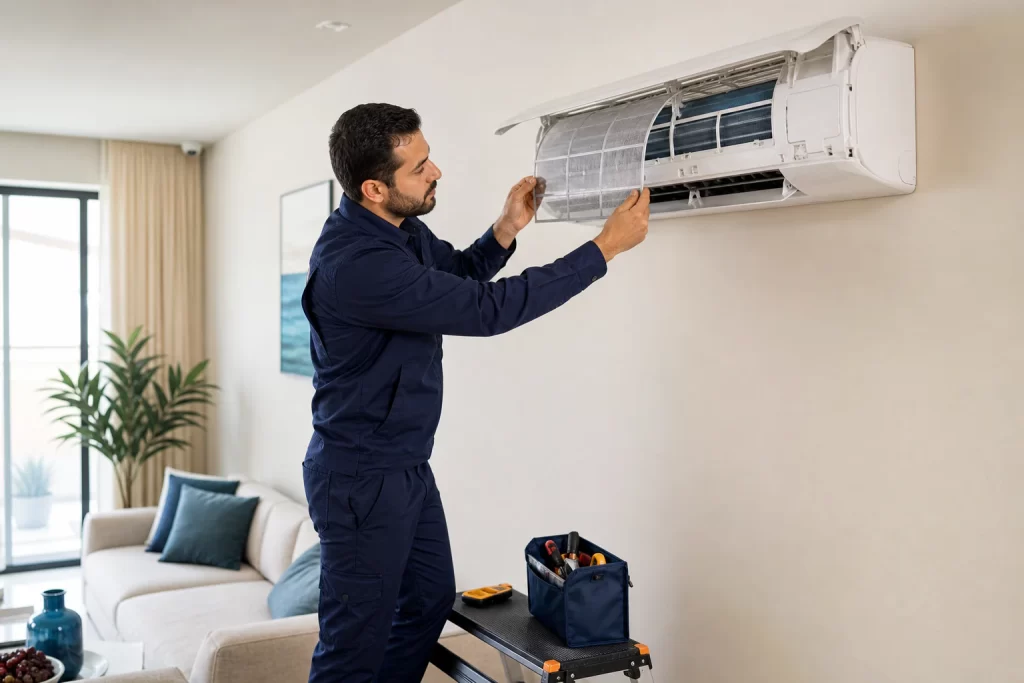
This AC maintenance checklist can help you notice a change in performance before it becomes a sudden failure. It covers safe observations only and does not replace inspection by a qualified AC technician.
Start with cooling performance
Compare the system with its normal behaviour. Does the room take longer to cool? Is one area warmer than the others? Does the unit run continuously or switch on and off more often than usual? Note the thermostat setting and how long the change has been present.
Check airflow without opening the unit
Stand near the supply vents and compare the airflow between rooms. Weak or uneven airflow can have several causes, including a restricted filter, duct issue, fan problem, or system imbalance. Do not remove panels or reach inside the equipment.
Notice new sounds, smells, or visible moisture
- Rattling, grinding, or repeated clicking that was not present before
- A musty, burning, or unusual chemical smell
- Water droplets, stains, or dampness around the indoor unit
- Ice visible on an accessible pipe or part of the unit
- A circuit breaker that repeatedly trips when the AC operates
Turn the system off and contact a professional if you smell burning, see smoke or exposed wiring, notice a serious leak near electrical components, or a breaker repeatedly trips. Contact local emergency services when there is immediate danger.
Prepare useful information for the technician
Record the unit type, approximate age if known, location, error code, and when the problem started. Take photos of visible water or an error display from a safe position. Mention any recent maintenance, electrical event, renovation, or change in system use.
Ask what the quote includes
An AC maintenance quote should explain whether it covers inspection, filter or coil cleaning, drain work, testing, consumables, and labour. Ask how replacement parts will be identified and approved, and whether another visit may be required. You can review the broader Rafeeg service categories before creating the request.
| Before the visit | Why it helps |
|---|---|
| Clear access to the unit | Reduces delays and protects nearby belongings |
| List of symptoms | Helps the technician reproduce the issue |
| Photos or error codes | Provides useful context before arrival |
| Building rules | Clarifies parking, permits, or access timing |
Review the work before the technician leaves
Allow the system to operate long enough to check cooling and airflow. Confirm what was cleaned, adjusted, or replaced. Ask for the invoice and any relevant maintenance recommendation in writing, then keep the record for the next service visit.
Plan preventive maintenance around real usage
There is no single interval suitable for every property. Equipment type, occupancy, dust exposure, operating hours, manufacturer guidance, and building requirements all matter. Use the technician’s findings to plan the next check rather than relying on a generic promise.
Ready to find the right home-service provider?
Describe what you need, review the available options, and confirm the scope before work begins.
This guide provides general practical information. Requirements vary by property, equipment, location, and site condition. Follow safety guidance and use a qualified professional when needed.
Read our editorial policy